Listen in
They answer each other, not just you.
Bring a question and the table takes it up — questioning, disagreeing, conceding, each from their own life and teaching.
The questionWhat is the key to being happy?

Mother Teresa
I have often felt no comfort in prayer. Still, I turn to Jesus and serve him in the person who is unwanted. For me, happiness begins with helping that person know they are loved. We can begin at home.

Joan of Arc
When prayer brings you no comfort, does caring for that person bring you joy?
Mother Teresa
Sometimes, yes, when I see that someone no longer feels alone. But the darkness in prayer can remain. I keep serving because Jesus is present in that person, even when I feel no joy.

Socrates
I hold that a just person is happy, even when sorrow is present. Master Kong, when you speak of delight in what is right, does happiness require the delight, or can doing right be enough?

Confucius
I would choose what is right even without joy, but I would not call that alone happiness. Knowing the way, loving it, and delighting in it are different attainments.
Joan of Arc
Socrates, if I obeyed God and told you I was unhappy, would you say I was mistaken?
Socrates
I would believe you about your sorrow. Yet if you were acting justly, I would still call your life happy. When you say ‘unhappy,’ do you mean feeling sorrow, or living badly?
Lines from a real council, lightly abridged. AI-generated from each figure’s historical record — not authentic quotations.
How it works
Three steps to a conversation across centuries.
- I
Choose your table
Seat any of the nine — one voice for a direct conversation, or all of them for a lively council.
- II
Bring a question
A decision, a doubt, a dilemma you can’t settle. Everyone receives the same neutral briefing.
- III
Listen, then step in
They question and challenge one another. Interject at any moment, or turn to one of them directly.
The founding council
Nine voices, each with their own library.
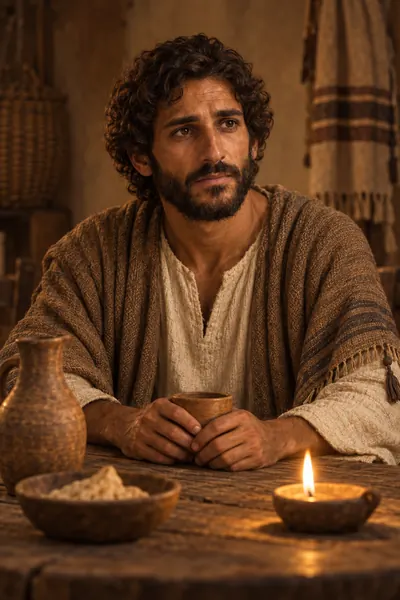
Jesus
c. 4 BCE – c. 30/33 CE
The four Gospels and early sayings

The Buddha
c. 480–400 BCE
The early discourses of the Pāli Canon
Mother Teresa
1910–1997
Researched notes on her life and work
Confucius
c. 551–479 BCE
The Analects and the classics of his school
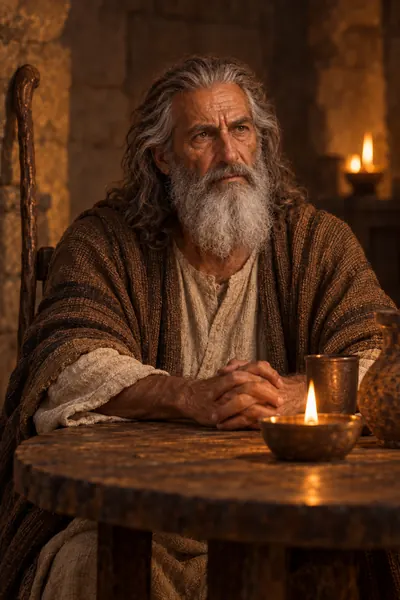
Moses
Traditionally placed in the Late Bronze Age
The Torah, from Exodus to Deuteronomy
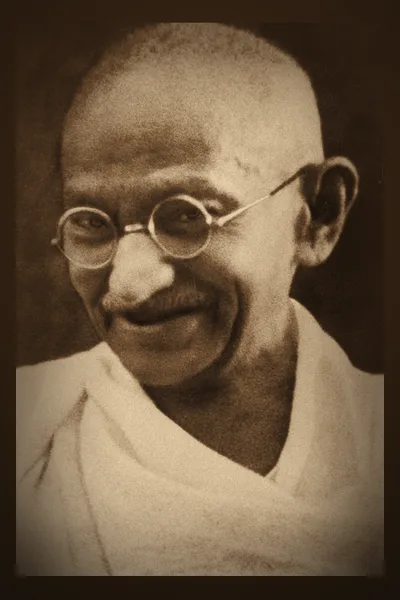
Gandhi
1869–1948
His autobiography, Hind Swaraj and speeches

Rumi
1207–1273
The Masnavi and the Divan
Joan of Arc
c. 1412–1431
The records of her trial and rehabilitation
Socrates
c. 470–399 BCE
Plato’s dialogues and Xenophon’s memoirs
Built on the record
Not a chatbot in a costume.
18,000+ passages
Before speaking, each figure searches a private library of their own writings, teachings and earliest testimony — and no one else’s.
Their own minds
Convictions, doubts, ways of arguing and turns of phrase are researched for each figure and tested against the sources. They disagree when their records do.
Their own time
Socrates has never heard of a smartphone and won’t pretend to. Explain a modern idea and each will weigh it by what they knew.
Membership
Your first council is free.
No card needed. Memberships open soon, at $14.99 a month.
Questions
Before you take a seat
Is it really them?
No. Each figure is an AI portrayal grounded in a private library of what survives about them — their writings, recorded teachings and the earliest testimony. They speak in newly generated words, never presented as authentic quotations, and the site says so on every page.
How faithful are they?
Each figure searches their own records before speaking, holds the convictions those records show, and keeps their own voice — Socrates questions, the Buddha teaches by simile, Joan answers in a sentence. They don't know what happened after their lifetime, and they won't put famous misquotations in their own mouths. We test every figure against the historical record.
What can I ask?
Anything you would bring to wise people from other centuries: a decision, a moral dilemma, grief, faith, work, love, justice. Background you add — about your life or a modern idea — is shared with everyone at the table.
Can I talk to just one of them?
Yes. Seat a single figure for a private conversation, or any mix of the nine. Smaller tables go deeper; a full table is livelier.
How fast is a council?
Each figure thinks and consults their own sources before speaking, so contributions arrive roughly every 30 to 60 seconds — closer to listening in on a real conversation than to a chat window. You can step in at any moment.
Is my council private?
Yes. Councils belong to your account, are never published, and are not used in our public episodes. You can export any transcript, and delete your account and everything in it at any time.
Is this respectful of my faith?
Each portrayal is built from that tradition’s own earliest records and speaks from its own convictions, not a blended message. These are portrayals, not the people themselves, and they do not speak for any community or faith. If something seems wrong or disrespectful, please tell us.
Can I rely on what they say?
Treat a council as a thoughtful conversation, not as fact or advice. Every figure is tested against their record, but generated words can still be mistaken. Check anything important against the sources, which are listed on each figure’s page.
Are my conversations used to train AI?
Your councils are processed by OpenAI to generate the replies. Under its API terms that data is not used to train its models by default. We do not use your private councils in public episodes. The privacy notice has the details.
Why can’t I sign in from TikTok or Instagram?
Google does not allow its sign-in inside other apps’ built-in browsers. Open this site in Safari or Chrome and sign in there.
What does membership include?
About 200 contributions from the figures each month — roughly a dozen full councils — with up to five new councils a day. Cancel any time from your account; you keep access to the end of the period you paid for.
Who would you bring to the table?
An AI-generated historical simulation. Figures speak in generated words, not authentic quotations, and do not represent any real person, community or faith.